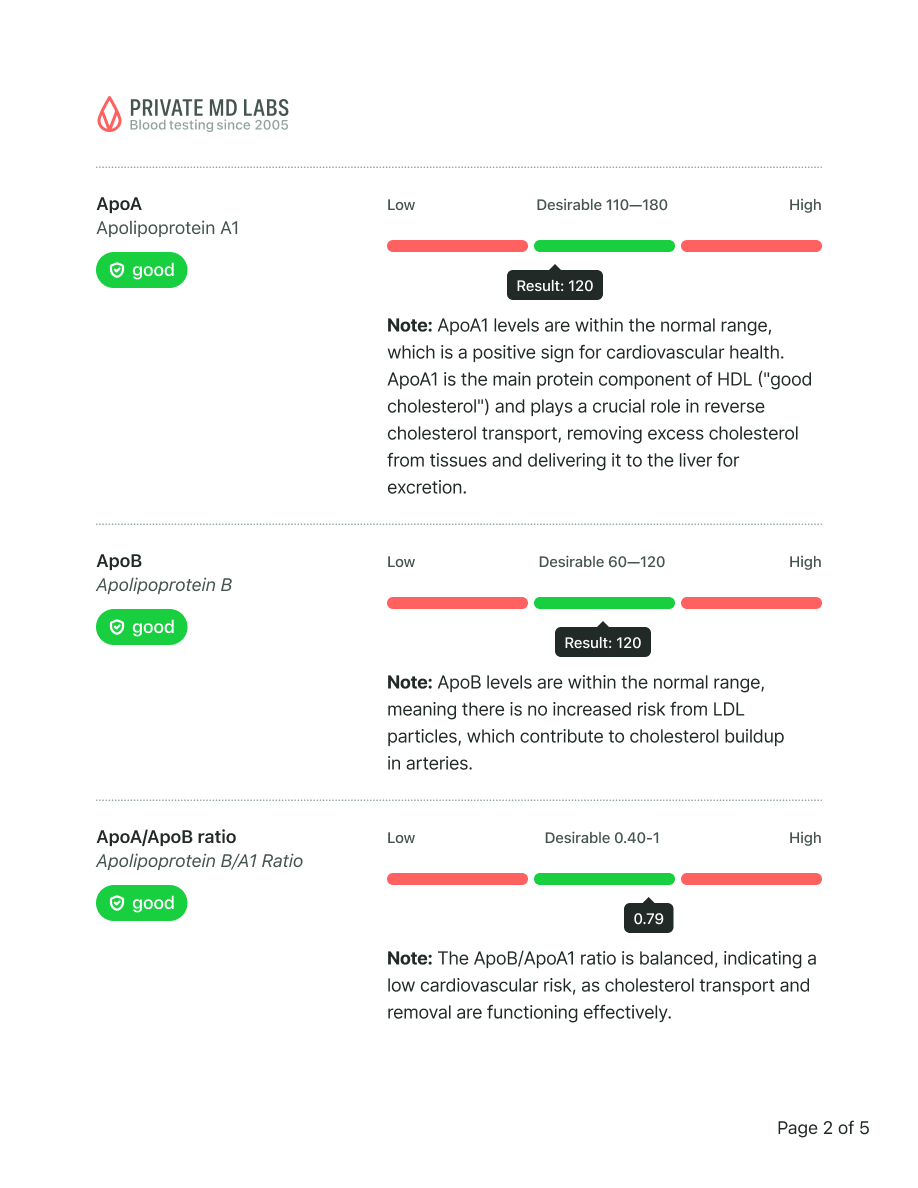
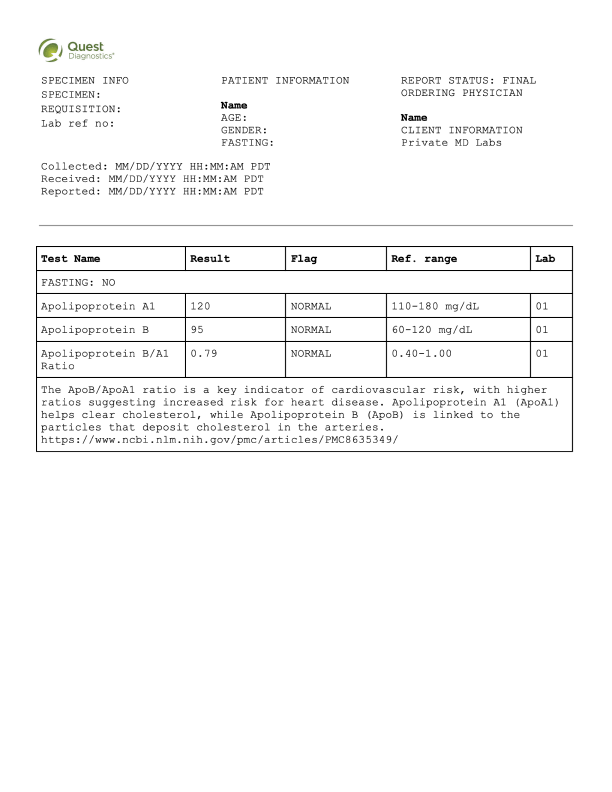
Sample results
Tangier disease is an extremely rare genetic disorder that severely impairs the body's ability to transport and process cholesterol and lipids. It is caused by mutations in the ABCA1 gene, which disrupts the production of apolipoprotein A1 and results in virtually absent HDL cholesterol levels. The Heart Attack Risk Assessment: Apo A1 & Apo B test is the most important test for diagnosis because it reveals the dramatically low apolipoprotein A1 levels that are the hallmark of this condition.
Tangier disease is caused by mutations in the ABCA1 gene, which provides instructions for making a protein that transports cholesterol and phospholipids across cell membranes. When this gene is defective, the body cannot properly remove cholesterol from cells and tissues, leading to abnormal cholesterol accumulation in various organs. This genetic defect prevents the normal formation of high-density lipoprotein (HDL) cholesterol particles, resulting in severely low or absent HDL levels and the distinctive orange-colored tonsils that characterize this extremely rare inherited disorder.
The Heart Attack Risk Assessment: Apo A1 & Apo B is the most important test for Tangier disease because it measures apolipoprotein A1 levels, which are dramatically reduced in this condition. In healthy people, Apo A1 levels range from 120-180 mg/dL, but patients with Tangier disease typically have levels below 5-10 mg/dL, which is virtually diagnostic when combined with clinical findings. This test also measures apolipoprotein B levels, helping distinguish Tangier disease from other lipid disorders. A lipid panel showing extremely low HDL cholesterol (often less than 5 mg/dL) provides additional supporting evidence, but the Apo A1 measurement is the key diagnostic marker.

You should get tested if you have enlarged, orange-colored tonsils along with extremely low HDL cholesterol levels discovered during routine blood work. Testing is also important if you have a family history of Tangier disease, early-onset cardiovascular disease, or unexplained neurological symptoms like muscle weakness or loss of sensation. Since this is an inherited condition, siblings and children of affected individuals should be screened even without symptoms to enable early monitoring and preventive care.
What this means
Your testosterone levels are slightly below the optimal range. While this is not necessarily cause for concern, it may contribute to occasional fatigue, reduced motivation, or lower muscle mass over time.
Recommended actions
Increase resistance or strength training
Prioritize 7–8 hours of quality sleep per night, try to reduce stress
Include more zinc- and magnesium-rich foods (like shellfish, beef, pumpkin seeds, spinach)
Consider retesting in 3–6 months
Not overhyped or overpriced. Just comprehensive blood testing made simple and for everyone.
Sample results
Your 24/7 Lab Guide
Quick questions: