Methamphetamine overdose is a life-threatening medical emergency caused by consuming a dangerously high amount of methamphetamine. It occurs when toxic levels of the stimulant drug overwhelm the body's systems, causing severe cardiovascular, neurological, and metabolic complications. The Amphetamine Confirmation Blood Test is the most important test for confirming methamphetamine overdose and assessing severity.
90-day money-back guaranteeLab order in minutesSave a trip to the doctorLow prices since 2005Labs within 2 miles
What causes methamphetamine overdose?
Methamphetamine overdose is caused by consuming an excessive amount of methamphetamine that overwhelms the body's ability to metabolize and eliminate the drug. This can happen through intentional high-dose use, accidentally taking too much, using methamphetamine with other substances like alcohol or opioids, or consuming methamphetamine that is more potent than expected. The toxic levels of the drug cause dangerous effects on the heart, brain, kidneys, and other vital organs, creating a medical emergency that requires immediate treatment.
What is the best test for methamphetamine overdose?
The Amphetamine Confirmation Blood Test is the most important test for methamphetamine overdose because it directly measures the concentration of methamphetamine and its metabolites in the bloodstream. This confirmatory test provides definitive evidence of methamphetamine presence and helps determine the severity of the overdose based on drug levels detected. Unlike urine screening tests that only show recent use, blood testing gives healthcare providers precise quantitative data that guides emergency treatment decisions, monitors how the drug is clearing from the system, and assesses the patient's risk level during the critical overdose period.
When should I get tested for methamphetamine overdose?
You should get tested immediately if you or someone you know experiences symptoms of methamphetamine overdose, including chest pain, rapid or irregular heartbeat, extremely high body temperature, severe agitation or paranoia, seizures, difficulty breathing, or loss of consciousness after using methamphetamine. Testing is also critical when someone has taken an unknown amount of methamphetamine, mixed the drug with other substances, or when medical providers need to confirm the cause of unexplained severe symptoms. This is a medical emergency requiring immediate hospital care, where blood testing will be performed as part of emergency evaluation and treatment.
What are the symptoms of methamphetamine overdose?
Methamphetamine overdose symptoms include dangerously high body temperature (hyperthermia), rapid or irregular heartbeat, chest pain, high blood pressure, difficulty breathing, severe agitation or violent behavior, paranoia and hallucinations, seizures, stroke symptoms like facial drooping or slurred speech, kidney failure, and loss of consciousness. Physical signs may also include profuse sweating, dilated pupils, muscle rigidity or twitching, and severe jaw clenching. The severity of symptoms depends on the amount consumed, method of use, and individual factors, but any suspected overdose requires immediate emergency medical attention.
Who is at risk for methamphetamine overdose?
People at highest risk for methamphetamine overdose include those who use the drug regularly and have developed tolerance (leading to taking larger doses), individuals who binge use methamphetamine over extended periods, people who inject or smoke methamphetamine (which delivers higher doses more quickly), those who combine methamphetamine with other drugs or alcohol, individuals who resume use after a period of abstinence (when tolerance has decreased), and people who obtain methamphetamine from unknown sources where potency varies. First-time users are also at risk because they lack awareness of their body's reaction and appropriate dosing.
What happens if methamphetamine overdose is left untreated?
Untreated methamphetamine overdose can lead to fatal complications including heart attack, stroke, severe hyperthermia causing multi-organ failure, kidney failure from rhabdomyolysis (muscle breakdown), respiratory failure, and fatal seizures. The extreme cardiovascular stress can cause permanent heart damage, while stroke can result in permanent brain injury or death. The longer the overdose goes untreated, the higher the risk of irreversible organ damage and death. Immediate emergency medical intervention is essential to prevent these life-threatening outcomes and provide supportive care that can save the person's life.
Can methamphetamine overdose be diagnosed with a blood test?
Yes, methamphetamine overdose can be confirmed with a blood test that detects and measures the concentration of methamphetamine and its metabolites in the bloodstream. The Amphetamine Confirmation Blood Test provides quantitative results showing exact drug levels, which helps emergency physicians assess overdose severity and guide treatment. Blood testing is preferred over urine testing in overdose situations because it reflects current intoxication levels rather than just recent use. While the clinical diagnosis is based primarily on symptoms and physical examination, blood test confirmation is essential for definitive diagnosis and monitoring during treatment.
How is methamphetamine overdose treated?
Methamphetamine overdose is treated in a hospital emergency department with supportive care focused on stabilizing vital functions and managing symptoms. Treatment includes rapid cooling for high body temperature, intravenous fluids to prevent dehydration and kidney damage, medications to control blood pressure and heart rate, benzodiazepines to reduce agitation and prevent seizures, and monitoring for complications like heart attack or stroke. Activated charcoal may be given if the drug was recently ingested orally. Patients require continuous monitoring in an intensive care setting until methamphetamine levels decrease and symptoms resolve, which may take several hours to days depending on the severity of the overdose.
How can I prevent methamphetamine overdose?
The only certain way to prevent methamphetamine overdose is to avoid using methamphetamine entirely. For those struggling with methamphetamine use, prevention strategies include seeking treatment for substance use disorder through counseling and rehabilitation programs, never using methamphetamine alone (so someone can call for help if needed), avoiding mixing methamphetamine with other drugs or alcohol, being cautious about drug potency from unknown sources, not increasing doses to chase previous highs, and recognizing early warning signs of overdose. Having naloxone available does not reverse methamphetamine overdose but may help if opioids are also involved. Professional addiction treatment significantly reduces overdose risk.
What should I do if someone is having a methamphetamine overdose?
If someone is experiencing a methamphetamine overdose, immediately call 911 and clearly state that you suspect a drug overdose. While waiting for emergency services, keep the person calm if they are agitated, move them to a cool environment if they feel extremely hot, turn them on their side if they are unconscious to prevent choking, do not restrain them unless necessary to prevent injury, and stay with them until help arrives. Do not try to make them vomit or give them food or drinks. Be prepared to provide information to paramedics about what drug was taken, how much, and when. Quick emergency response is critical for survival and reducing the risk of permanent complications.
How’s this work?
Getting your blood test with us is easy, private & backed by the power of science.
Long story short:
In the test options, use the filters or search box to narrow your choices and find the test you want.
If you need a hand navigating through options, text our super friendly support team at 754-799-7833, and we'll provide tailored suggestions to help you find the ideal test.
Once your order is placed, we’ll create your doctor’s lab order remotely, without any need for you to make a trip to a doctor in person or to talk to the doctor. Expect to receive your doctor’s lab order right in your inbox. It will also be in your patient portal if you need to find it later. We’ll also include instructions regarding fasting and other requirements for your test. Your patient portal will be auto-created hassle-free during checkout.
If this is your first time ordering, you'll be prompted to create a password for instant login access to your patient portal. It's a quick way to conveniently access your orders and results whenever you want.
When you’re ready, visit one of our 4,000 locations. Just bring your ID – no printing or faxing of your lab order is needed, as your order and details will already be in the lab system.
Note that most lab locations don’t accept walk-ins, so it’s best to book an appointment in advance. Don’t worry – we’ll provide detailed instructions along the way.
You’ll get your results via email & SMS and dive into understanding your body better. Yup, that easy!
If you have any questions, please text us at 754-799-7833 or email support@privatemdlabs.com and we'll gladly help you.
How do I know which test to get?
In the test options, find the test you want.
If you’re not sure which test to get, we can lend a hand in finding the right option.
Just text or call us at 754-799-7833, email us at support@privatemdlabs.com, and we'll gladly help you. We've got your back and reply quickly.
Is it possible to make changes to my lab order if I made a mistake with the name, date of birth, or any other details?
Absolutely! We totally understand that errors can happen. No worries, we're here to help you.
Just reach out to us via text at 754-799-7833 or shoot us an email at
support@privatemdlabs.com. Remember to include your order number and let us know the correct information you’d like to update.
Our awesome team will jump right in and make sure everything is sorted out and accurate for you.
There are no changes necessary if your address is wrong on the requisition though. We don’t mail anything out.
Our lab requires an address to be listed to generate an order.
Do you accept health insurance?
Only HSA & FSA is accepted.
Our services are strictly self-pay and cannot be submitted to your health insurance provider except for Health Savings Accounts or Flexible Savings Accounts.
This policy applies to all insurance companies, including federal health insurance programs like Medicare.
You can read more about our cancellation policy here.
How can I find a lab location near me?
During the ordering process, you’ll be able to select a specific lab near you, with no strings attached!
You can switch it up later easily and visit any of our authorized locations as long as it’s the same lab company you selected your test for (Quest Diagnostics or Labcorp).
Before you proceed with your order, feel free to browse through all our lab locations here. This will give you the peace of mind of knowing that there's a lab nearby your home, office or your favorite gym.
Here’s how easy it is to get blood work done on your terms
Order your testSave a trip to the doctor. Your results will come with clear, friendly explanations.Takes 2 minutes
Book an appointmentVisit any of our 4,000 nearby lab locations to have your samples collected.Book or walk-in
Get resultsReceive a clear, easy-to-digest health report by email & SMS within a few business days.Get answers, fast
Here’s why 1,000,000+ customers chose us for affordable hassle-free private blood testing.
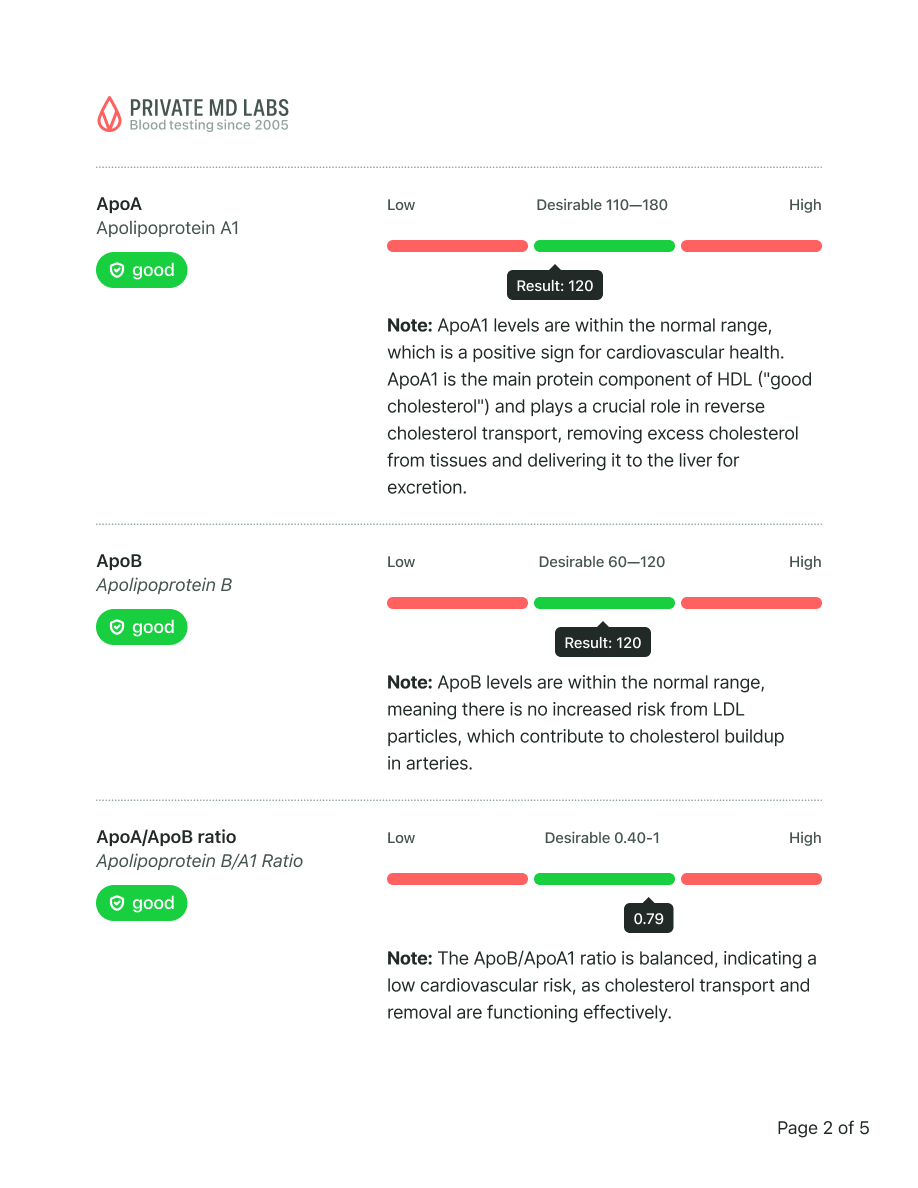
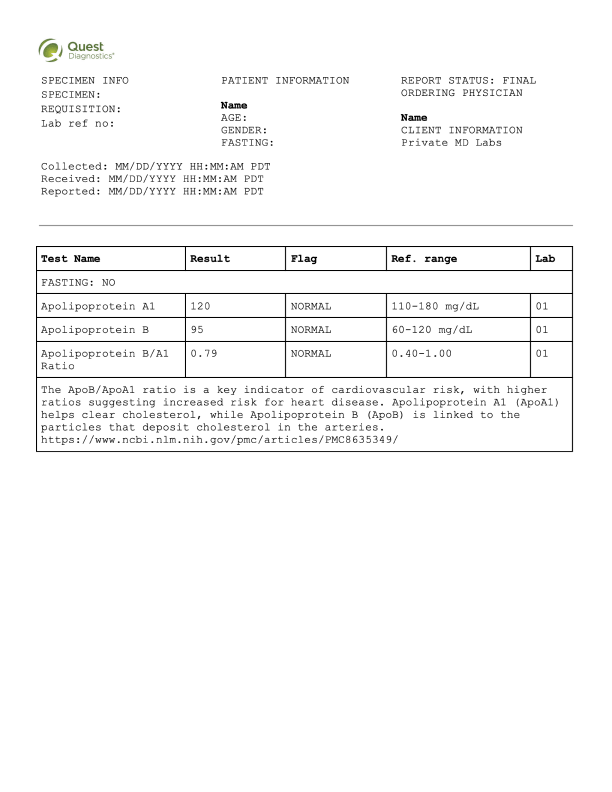
You get clinical lab reports & simplified health insights.
Save time & gas, go straight to the lab. Our doctors cover the rest.
Results start landing the next day after your lab visit.*
We don’t sell or share your data. Your time & privacy matter.
US-licensed doctors have your back if things get unclear.
No hidden fees, nice discounts for regular checkups.
Save a trip to the doctor, go directly to the lab
Instant orders, results often overnight*
Results explained in simple language
Reviewed by US licensed doctors
Fast & confidential, we never sell or share your data
No insurance needed, transparent pricing
Demo results
Testosterone375 ng/dL
Demo results
NormalOptimal 400 - 1000High
375 ng/dL
What this means
Your testosterone levels are slightly below the optimal range. While this is not necessarily cause for concern, it may contribute to occasional fatigue, reduced motivation, or lower muscle mass over time.
Recommended actions
Increase resistance or strength training
Prioritize 7–8 hours of quality sleep per night, try to reduce stress
Include more zinc- and magnesium-rich foods (like shellfish, beef, pumpkin seeds, spinach)
Consider retesting in 3–6 months
* Regular blood test results (e.g., CBC) typically start arriving the next business day after sample collection. More complex tests, such as hormone panels, may take up to 10–15 business days due to their complexity.
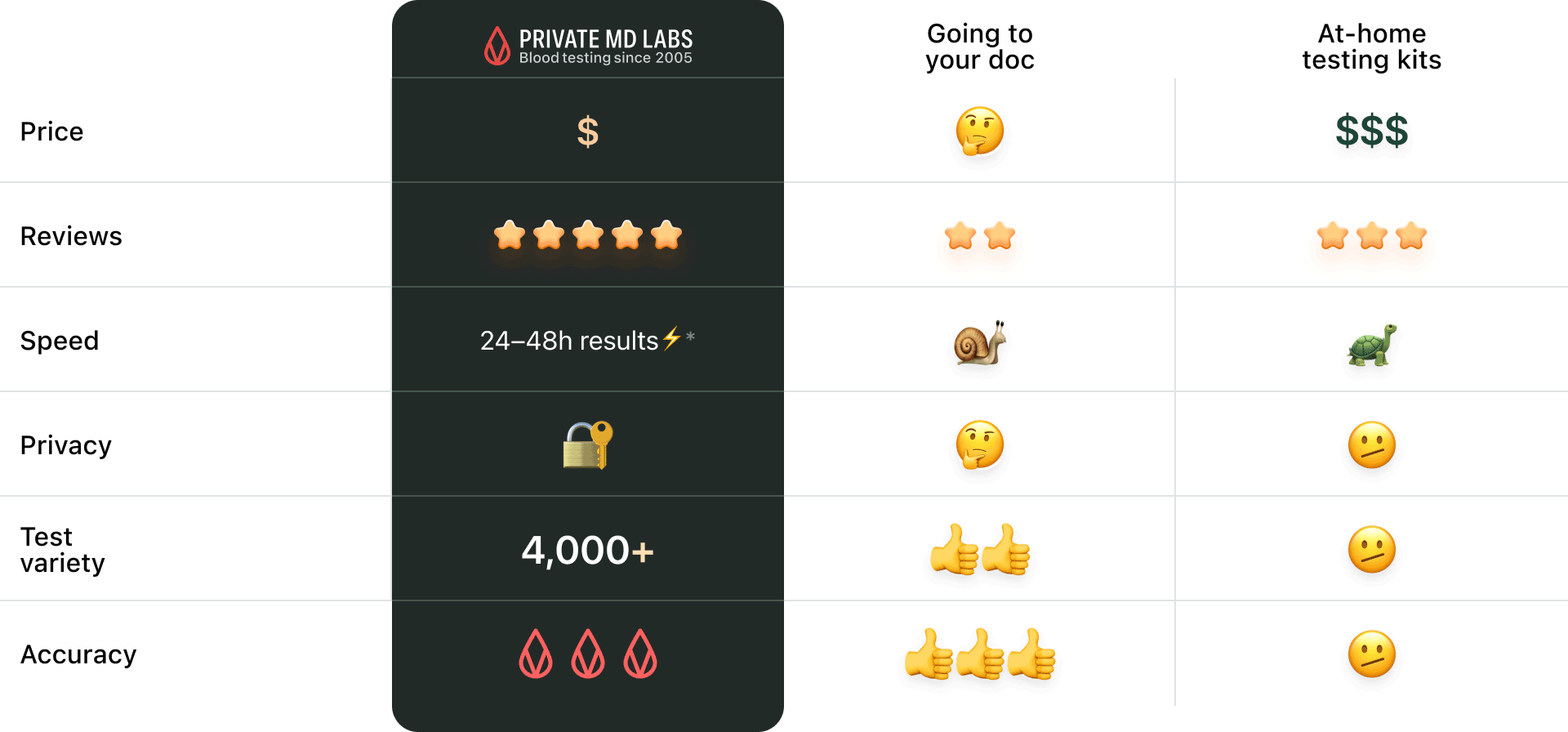
Us vs. Them
Not overhyped or overpriced. Just comprehensive blood testing made simple and for everyone.
* Regular blood test results (e.g., CBC) typically start arriving the next business day after sample collection. More complex tests, such as hormone panels, may take up to 10–15 business days due to their complexity.
1,000,000+ blood tests later, here's what our customers say
Estradiol Ultrasensitive results may get delayed due to high lab volume.It’s a nationwide delay affecting all labs (not just us). Standard processing times apply to all other tests in this panel.
Lipoprotein extended turnaround
Lipoprotein Fractionation, Ion Mobility results may get delayed due to high lab volume.It’s a nationwide delay affecting all labs (not just us). Standard processing times apply to all other tests in this panel.
Pregnenolone extended turnaround
Pregnenolone results may get delayed due to high lab volume.It’s a nationwide delay affecting all labs (not just us). Standard processing times apply to all other tests in this panel.



 90-day money-back guarantee
 Lab order in minutes
 Save a trip to the doctor
 Low prices since 2005
 Labs within 2 miles