What is Herpes Simplex Virus Type 2 (HSV-2) Infection?
Herpes Simplex Virus Type 2 (HSV-2) is a sexually transmitted infection that primarily causes genital herpes, characterized by painful blisters or sores in the genital area. It is caused by the herpes simplex virus type 2, which is transmitted through sexual contact with an infected person. The Herpes Simplex Virus 1 and 2 (IgG), Type Specific Antibodies test is the most important test for diagnosis because it detects HSV-2 specific IgG antibodies in the blood.
90-day money-back guaranteeLab order in minutesSave a trip to the doctorLow prices since 2005Labs within 2 miles
What causes HSV-2 infection?
HSV-2 infection is caused by the herpes simplex virus type 2, which is transmitted through direct skin-to-skin contact during vaginal, anal, or oral sex with someone who has the virus. The virus enters the body through tiny breaks in the skin or through mucous membranes in the genital area, mouth, or rectum. Once infected, the virus travels to nerve cells and remains dormant in the body for life, periodically reactivating to cause outbreaks of painful blisters or sores.
What is the best test for HSV-2 infection?
The Herpes Simplex Virus 1 and 2 (IgG), Type Specific Antibodies test is the most important blood test for HSV-2 infection because it detects type-specific IgG antibodies that distinguish between HSV-1 and HSV-2. This test confirms whether you have been exposed to HSV-2, the virus responsible for genital herpes, and can identify infections even when symptoms are not present. For enhanced accuracy, the Herpes Simplex Virus 2 (IgG), with Reflex to HSV-2 Inhibition test adds a confirmatory step to eliminate false positives and provide definitive results.
When should I get tested for HSV-2?
You should get tested if you notice painful blisters or sores in your genital area, have had unprotected sex with a new or multiple partners, or have been notified by a sexual partner that they have genital herpes. Testing is also important if you are pregnant or planning pregnancy, as HSV-2 can be transmitted to babies during delivery. Wait at least 2-12 weeks after potential exposure for accurate results, as IgG antibodies take time to develop.
What are the symptoms of HSV-2 infection?
HSV-2 symptoms include painful blisters or open sores in the genital area, buttocks, or thighs, often accompanied by itching, burning, or tingling sensations before the outbreak. You might also experience flu-like symptoms during the first outbreak, including fever, body aches, swollen lymph nodes, and headache. Many people with HSV-2 have mild symptoms that go unnoticed or mistake them for ingrown hairs, pimples, or other skin conditions, which is why testing is essential for accurate diagnosis.
Who is at risk for HSV-2 infection?
Anyone who is sexually active is at risk for HSV-2, but risk increases with having multiple sexual partners, having unprotected sex, starting sexual activity at a young age, or having a weakened immune system. Women are more susceptible than men because the virus transmits more easily from men to women during sex. People with other sexually transmitted infections, particularly those causing genital sores or inflammation, also have higher risk of contracting HSV-2.
What happens if HSV-2 is left untreated?
Untreated HSV-2 can lead to frequent and painful genital outbreaks that significantly impact quality of life and intimate relationships. The virus increases your risk of acquiring or transmitting HIV by creating open sores that provide entry points for the virus. Pregnant women with untreated HSV-2 can transmit the virus to their baby during delivery, potentially causing serious complications including brain damage, blindness, or death. Without treatment, you also risk unknowingly spreading the infection to sexual partners.
Can HSV-2 be diagnosed with a blood test?
Yes, HSV-2 can be accurately diagnosed with a blood test that detects type-specific IgG antibodies produced by your immune system in response to the virus. Blood tests are particularly valuable because they can identify HSV-2 infection even when you have no symptoms or visible sores, and they distinguish between HSV-1 and HSV-2. For the most accurate results, testing should be done at least 2-12 weeks after potential exposure, as it takes time for antibodies to develop to detectable levels.
How is HSV-2 treated?
HSV-2 is treated with antiviral medications like acyclovir, valacyclovir, or famciclovir, which reduce the severity and duration of outbreaks, speed healing, and decrease the risk of transmission to partners. Your doctor may prescribe episodic therapy to take during outbreaks or daily suppressive therapy if you have frequent recurrences or want to reduce transmission risk. While these medications effectively manage symptoms and reduce viral shedding, they cannot cure the infection or completely eliminate the virus from your body.
How can I prevent HSV-2 infection?
You can prevent HSV-2 by using latex condoms correctly every time you have sex, though condoms do not provide complete protection since the virus can be transmitted from skin not covered by the condom. Limiting your number of sexual partners, avoiding sex during active outbreaks when sores are present, and having honest conversations with partners about STI testing and status significantly reduce risk. If you have HSV-2, taking daily suppressive antiviral medication reduces the likelihood of transmitting the virus to uninfected partners by approximately 50 percent.
What can I do at home for HSV-2 symptoms?
At home, you can manage HSV-2 symptoms by keeping the affected area clean and dry, taking warm baths with Epsom salts to soothe discomfort, and applying ice packs wrapped in cloth to reduce pain and swelling. Wear loose-fitting cotton underwear and clothing to minimize irritation, avoid touching sores to prevent spreading the virus to other body parts, and wash your hands frequently. Over-the-counter pain relievers like ibuprofen or acetaminophen can help with discomfort, and getting adequate rest, managing stress, and maintaining a healthy immune system may reduce outbreak frequency.
How’s this work?
Getting your blood test with us is easy, private & backed by the power of science.
Long story short:
In the test options, use the filters or search box to narrow your choices and find the test you want.
If you need a hand navigating through options, text our super friendly support team at 754-799-7833, and we'll provide tailored suggestions to help you find the ideal test.
Once your order is placed, we’ll create your doctor’s lab order remotely, without any need for you to make a trip to a doctor in person or to talk to the doctor. Expect to receive your doctor’s lab order right in your inbox. It will also be in your patient portal if you need to find it later. We’ll also include instructions regarding fasting and other requirements for your test. Your patient portal will be auto-created hassle-free during checkout.
If this is your first time ordering, you'll be prompted to create a password for instant login access to your patient portal. It's a quick way to conveniently access your orders and results whenever you want.
When you’re ready, visit one of our 4,000 locations. Just bring your ID – no printing or faxing of your lab order is needed, as your order and details will already be in the lab system.
Note that most lab locations don’t accept walk-ins, so it’s best to book an appointment in advance. Don’t worry – we’ll provide detailed instructions along the way.
You’ll get your results via email & SMS and dive into understanding your body better. Yup, that easy!
If you have any questions, please text us at 754-799-7833 or email support@privatemdlabs.com and we'll gladly help you.
How do I know which test to get?
In the test options, find the test you want.
If you’re not sure which test to get, we can lend a hand in finding the right option.
Just text or call us at 754-799-7833, email us at support@privatemdlabs.com, and we'll gladly help you. We've got your back and reply quickly.
Is it possible to make changes to my lab order if I made a mistake with the name, date of birth, or any other details?
Absolutely! We totally understand that errors can happen. No worries, we're here to help you.
Just reach out to us via text at 754-799-7833 or shoot us an email at
support@privatemdlabs.com. Remember to include your order number and let us know the correct information you’d like to update.
Our awesome team will jump right in and make sure everything is sorted out and accurate for you.
There are no changes necessary if your address is wrong on the requisition though. We don’t mail anything out.
Our lab requires an address to be listed to generate an order.
Do you accept health insurance?
Only HSA & FSA is accepted.
Our services are strictly self-pay and cannot be submitted to your health insurance provider except for Health Savings Accounts or Flexible Savings Accounts.
This policy applies to all insurance companies, including federal health insurance programs like Medicare.
You can read more about our cancellation policy here.
How can I find a lab location near me?
During the ordering process, you’ll be able to select a specific lab near you, with no strings attached!
You can switch it up later easily and visit any of our authorized locations as long as it’s the same lab company you selected your test for (Quest Diagnostics or Labcorp).
Before you proceed with your order, feel free to browse through all our lab locations here. This will give you the peace of mind of knowing that there's a lab nearby your home, office or your favorite gym.
Here’s how easy it is to get blood work done on your terms
Order your testSave a trip to the doctor. Your results will come with clear, friendly explanations.Takes 2 minutes
Book an appointmentVisit any of our 4,000 nearby lab locations to have your samples collected.Book or walk-in
Get resultsReceive a clear, easy-to-digest health report by email & SMS within a few business days.Get answers, fast
Here’s why 1,000,000+ customers chose us for affordable hassle-free private blood testing.
You get clinical lab reports & simplified health insights.
Save time & gas, go straight to the lab. Our doctors cover the rest.
Results start landing the next day after your lab visit.*
We don’t sell or share your data. Your time & privacy matter.
US-licensed doctors have your back if things get unclear.
No hidden fees, nice discounts for regular checkups.
Save a trip to the doctor, go directly to the lab
Instant orders, results often overnight*
Results explained in simple language
Reviewed by US licensed doctors
Fast & confidential, we never sell or share your data
No insurance needed, transparent pricing
Demo results
Testosterone375 ng/dL
Demo results
NormalOptimal 400 - 1000High
375 ng/dL
What this means
Your testosterone levels are slightly below the optimal range. While this is not necessarily cause for concern, it may contribute to occasional fatigue, reduced motivation, or lower muscle mass over time.
Recommended actions
Increase resistance or strength training
Prioritize 7–8 hours of quality sleep per night, try to reduce stress
Include more zinc- and magnesium-rich foods (like shellfish, beef, pumpkin seeds, spinach)
Consider retesting in 3–6 months
* Regular blood test results (e.g., CBC) typically start arriving the next business day after sample collection. More complex tests, such as hormone panels, may take up to 10–15 business days due to their complexity.
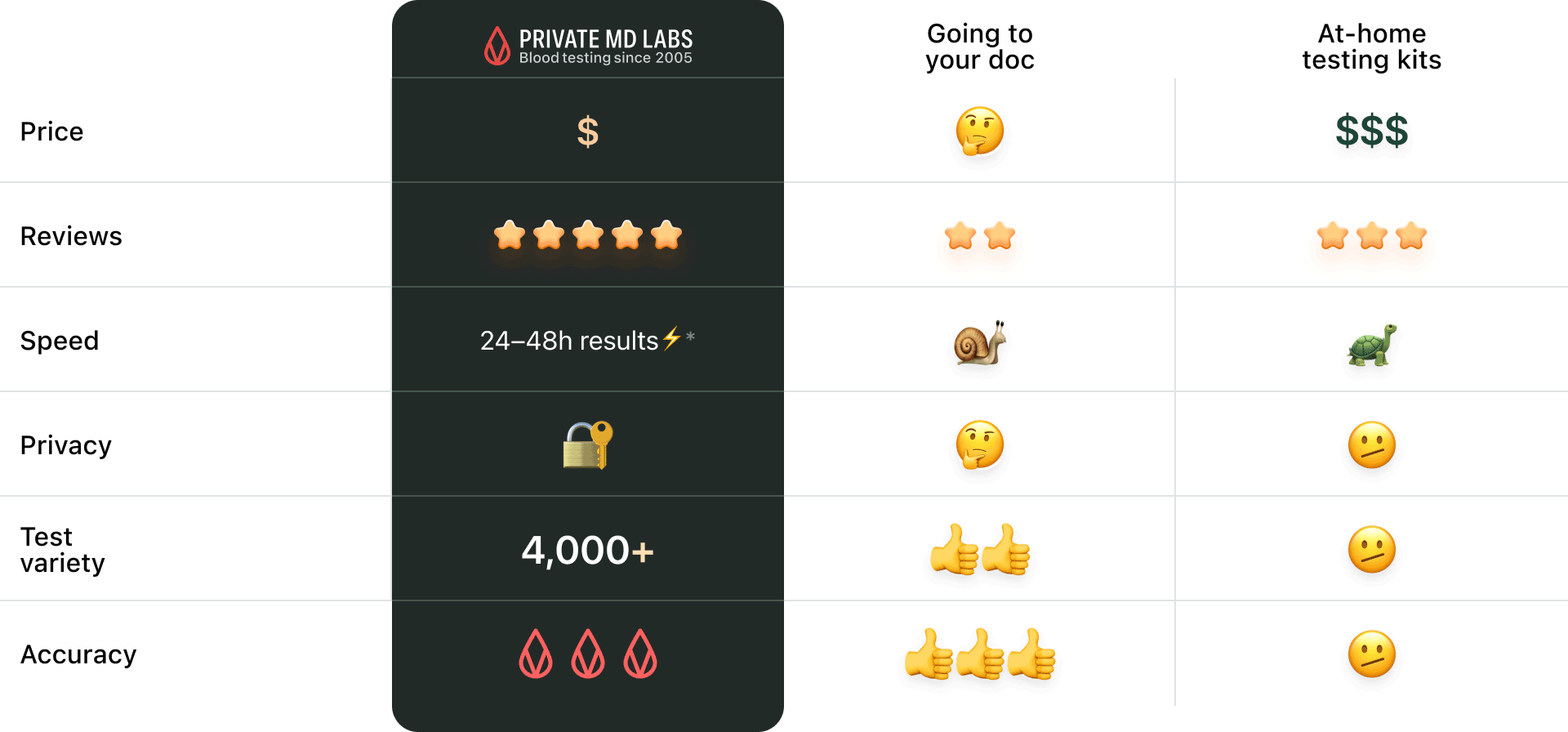
Us vs. Them
Not overhyped or overpriced. Just comprehensive blood testing made simple and for everyone.
* Regular blood test results (e.g., CBC) typically start arriving the next business day after sample collection. More complex tests, such as hormone panels, may take up to 10–15 business days due to their complexity.
1,000,000+ blood tests later, here's what our customers say
Estradiol Ultrasensitive results may get delayed due to high lab volume.It’s a nationwide delay affecting all labs (not just us). Standard processing times apply to all other tests in this panel.
Lipoprotein extended turnaround
Lipoprotein Fractionation, Ion Mobility results may get delayed due to high lab volume.It’s a nationwide delay affecting all labs (not just us). Standard processing times apply to all other tests in this panel.
Pregnenolone extended turnaround
Pregnenolone results may get delayed due to high lab volume.It’s a nationwide delay affecting all labs (not just us). Standard processing times apply to all other tests in this panel.



 90-day money-back guarantee
 Lab order in minutes
 Save a trip to the doctor
 Low prices since 2005
 Labs within 2 miles