Gastric hypersecretion is a condition where the stomach produces excessive amounts of gastric acid. It is caused by elevated levels of gastrin, a hormone that stimulates acid production, often due to conditions like Zollinger-Ellison syndrome or gastrin-producing tumors. The Gastrin blood test is the most important test for diagnosing this condition.
90-day money-back guaranteeLab order in minutesSave a trip to the doctorLow prices since 2005Labs within 2 miles
What causes gastric hypersecretion?
Gastric hypersecretion is caused by abnormally high levels of gastrin, a hormone produced by specialized cells in the stomach and small intestine. When gastrin levels become elevated, they overstimulate the stomach lining to produce excessive amounts of gastric acid. Common causes include Zollinger-Ellison syndrome, gastrinomas (gastrin-secreting tumors typically located in the pancreas or duodenum), and certain medications like proton pump inhibitors taken long-term. In some cases, Helicobacter pylori infection or chronic kidney disease can also lead to elevated gastrin levels and increased acid production.
What is the best test for gastric hypersecretion?
The Gastrin blood test is the most important test for gastric hypersecretion because it directly measures the hormone responsible for stimulating stomach acid production. Elevated gastrin levels are the primary indicator of this condition and help identify underlying causes like Zollinger-Ellison syndrome or gastrin-producing tumors. This test is essential for diagnosis because while symptoms like heartburn and stomach pain may suggest excess acid production, only measuring gastrin levels can confirm the hormonal imbalance driving the condition. Healthcare providers use gastrin test results to determine the severity of hypersecretion and develop targeted treatment strategies to manage excessive acid production and prevent complications like severe ulcers and bleeding.
When should I get tested for gastric hypersecretion?
You should get tested if you experience persistent heartburn that does not respond to standard treatments, recurrent stomach ulcers, severe abdominal pain, chronic diarrhea, or frequent acid reflux symptoms. Testing is especially important if you have peptic ulcers that keep coming back despite treatment, unexplained gastrointestinal bleeding, or a family history of gastrin-producing tumors. You might also consider testing if you notice ongoing nausea, difficulty swallowing, or weight loss combined with digestive symptoms. Early detection through gastrin testing can prevent serious complications like perforation of stomach ulcers and identify treatable underlying conditions before they cause permanent damage.
What are the symptoms of gastric hypersecretion?
The primary symptoms of gastric hypersecretion include burning stomach pain, severe and persistent heartburn, frequent acid reflux, and nausea. You might experience abdominal discomfort that worsens between meals or at night, chronic diarrhea, vomiting, and bloating. Many people notice that their symptoms do not improve with over-the-counter antacids or standard acid-reducing medications. In more severe cases, you may experience gastrointestinal bleeding, which can appear as black, tarry stools or vomit that looks like coffee grounds, along with fatigue from anemia and unintended weight loss.
Who is at risk for gastric hypersecretion?
People with a family history of multiple endocrine neoplasia type 1 (MEN1) syndrome have an increased risk of developing gastric hypersecretion due to gastrin-producing tumors. Those with a personal history of peptic ulcers, chronic Helicobacter pylori infection, or gastroesophageal reflux disease are at higher risk. Long-term use of proton pump inhibitors can also elevate gastrin levels and increase risk. Additionally, individuals with chronic kidney disease, pernicious anemia, or previous stomach surgery may be more susceptible to developing abnormal gastrin levels and subsequent gastric hypersecretion.
What happens if gastric hypersecretion is left untreated?
If left untreated, gastric hypersecretion can lead to severe and recurrent peptic ulcers in the stomach and duodenum, which may perforate and cause life-threatening internal bleeding. Chronic exposure to excessive stomach acid can damage the esophagus, leading to Barrett esophagus, a precancerous condition that increases the risk of esophageal cancer. The condition can cause chronic diarrhea leading to malabsorption of nutrients, vitamin deficiencies, and significant weight loss. Untreated gastrinomas associated with Zollinger-Ellison syndrome may grow and spread to other organs, making treatment more difficult and reducing long-term survival rates.
Can gastric hypersecretion be diagnosed with a blood test?
Yes, gastric hypersecretion can be effectively diagnosed with a blood test that measures gastrin hormone levels. The Gastrin blood test is the primary diagnostic tool because elevated gastrin directly indicates the hormonal cause of excessive stomach acid production. While symptoms and endoscopy can suggest the condition, only blood testing can confirm abnormal gastrin levels and distinguish gastric hypersecretion from other digestive disorders. Your healthcare provider may also recommend fasting before the test and may perform additional testing, such as a secretin stimulation test, to further evaluate gastrin response and identify specific underlying causes like gastrinomas.
How is gastric hypersecretion treated?
Treatment for gastric hypersecretion focuses on reducing stomach acid production and addressing the underlying cause. High-dose proton pump inhibitors are the primary medication used to control excessive acid secretion and heal ulcers. If a gastrinoma or tumor is identified as the cause, surgical removal may be necessary to eliminate the source of excess gastrin production. For Zollinger-Ellison syndrome, long-term acid suppression therapy combined with monitoring for tumor growth is essential. In some cases, octreotide, a medication that inhibits gastrin release, may be prescribed. Treatment is individualized based on the underlying cause, severity of symptoms, and presence of complications.
How can I prevent gastric hypersecretion?
While some causes of gastric hypersecretion like genetic syndromes cannot be prevented, you can reduce your risk by treating Helicobacter pylori infections promptly, avoiding long-term unnecessary use of proton pump inhibitors without medical supervision, and managing existing digestive conditions properly. If you have a family history of multiple endocrine neoplasia or gastrin-producing tumors, regular screening with your healthcare provider can help detect problems early. Avoiding excessive alcohol consumption, managing stress, and not smoking can also support overall digestive health and may reduce the risk of conditions that lead to abnormal gastrin production.
What can I do at home for gastric hypersecretion?
While medical treatment is essential for gastric hypersecretion, you can manage symptoms at home by eating smaller, more frequent meals to reduce acid stimulation, avoiding trigger foods like spicy dishes, citrus, chocolate, caffeine, and fatty foods that increase acid production. Elevating the head of your bed by 6 to 8 inches can help prevent nighttime acid reflux. Avoiding lying down for at least three hours after eating and maintaining a healthy weight can reduce pressure on your stomach. Stress management techniques like meditation and deep breathing may help, as stress can worsen symptoms. However, these home measures should complement, not replace, medical treatment and monitoring for this serious condition.
How’s this work?
Getting your blood test with us is easy, private & backed by the power of science.
Long story short:
In the test options, use the filters or search box to narrow your choices and find the test you want.
If you need a hand navigating through options, text our super friendly support team at 754-799-7833, and we'll provide tailored suggestions to help you find the ideal test.
Once your order is placed, we’ll create your doctor’s lab order remotely, without any need for you to make a trip to a doctor in person or to talk to the doctor. Expect to receive your doctor’s lab order right in your inbox. It will also be in your patient portal if you need to find it later. We’ll also include instructions regarding fasting and other requirements for your test. Your patient portal will be auto-created hassle-free during checkout.
If this is your first time ordering, you'll be prompted to create a password for instant login access to your patient portal. It's a quick way to conveniently access your orders and results whenever you want.
When you’re ready, visit one of our 4,000 locations. Just bring your ID – no printing or faxing of your lab order is needed, as your order and details will already be in the lab system.
Note that most lab locations don’t accept walk-ins, so it’s best to book an appointment in advance. Don’t worry – we’ll provide detailed instructions along the way.
You’ll get your results via email & SMS and dive into understanding your body better. Yup, that easy!
If you have any questions, please text us at 754-799-7833 or email support@privatemdlabs.com and we'll gladly help you.
How do I know which test to get?
In the test options, find the test you want.
If you’re not sure which test to get, we can lend a hand in finding the right option.
Just text or call us at 754-799-7833, email us at support@privatemdlabs.com, and we'll gladly help you. We've got your back and reply quickly.
Is it possible to make changes to my lab order if I made a mistake with the name, date of birth, or any other details?
Absolutely! We totally understand that errors can happen. No worries, we're here to help you.
Just reach out to us via text at 754-799-7833 or shoot us an email at
support@privatemdlabs.com. Remember to include your order number and let us know the correct information you’d like to update.
Our awesome team will jump right in and make sure everything is sorted out and accurate for you.
There are no changes necessary if your address is wrong on the requisition though. We don’t mail anything out.
Our lab requires an address to be listed to generate an order.
Do you accept health insurance?
Only HSA & FSA is accepted.
Our services are strictly self-pay and cannot be submitted to your health insurance provider except for Health Savings Accounts or Flexible Savings Accounts.
This policy applies to all insurance companies, including federal health insurance programs like Medicare.
You can read more about our cancellation policy here.
How can I find a lab location near me?
During the ordering process, you’ll be able to select a specific lab near you, with no strings attached!
You can switch it up later easily and visit any of our authorized locations as long as it’s the same lab company you selected your test for (Quest Diagnostics or Labcorp).
Before you proceed with your order, feel free to browse through all our lab locations here. This will give you the peace of mind of knowing that there's a lab nearby your home, office or your favorite gym.
Here’s how easy it is to get blood work done on your terms
Order your testSave a trip to the doctor. Your results will come with clear, friendly explanations.Takes 2 minutes
Book an appointmentVisit any of our 4,000 nearby lab locations to have your samples collected.Book or walk-in
Get resultsReceive a clear, easy-to-digest health report by email & SMS within a few business days.Get answers, fast
Here’s why 1,000,000+ customers chose us for affordable hassle-free private blood testing.
You get clinical lab reports & simplified health insights.
Save time & gas, go straight to the lab. Our doctors cover the rest.
Results start landing the next day after your lab visit.*
We don’t sell or share your data. Your time & privacy matter.
US-licensed doctors have your back if things get unclear.
No hidden fees, nice discounts for regular checkups.
Save a trip to the doctor, go directly to the lab
Instant orders, results often overnight*
Results explained in simple language
Reviewed by US licensed doctors
Fast & confidential, we never sell or share your data
No insurance needed, transparent pricing
Demo results
Testosterone375 ng/dL
Demo results
NormalOptimal 400 - 1000High
375 ng/dL
What this means
Your testosterone levels are slightly below the optimal range. While this is not necessarily cause for concern, it may contribute to occasional fatigue, reduced motivation, or lower muscle mass over time.
Recommended actions
Increase resistance or strength training
Prioritize 7–8 hours of quality sleep per night, try to reduce stress
Include more zinc- and magnesium-rich foods (like shellfish, beef, pumpkin seeds, spinach)
Consider retesting in 3–6 months
* Regular blood test results (e.g., CBC) typically start arriving the next business day after sample collection. More complex tests, such as hormone panels, may take up to 10–15 business days due to their complexity.
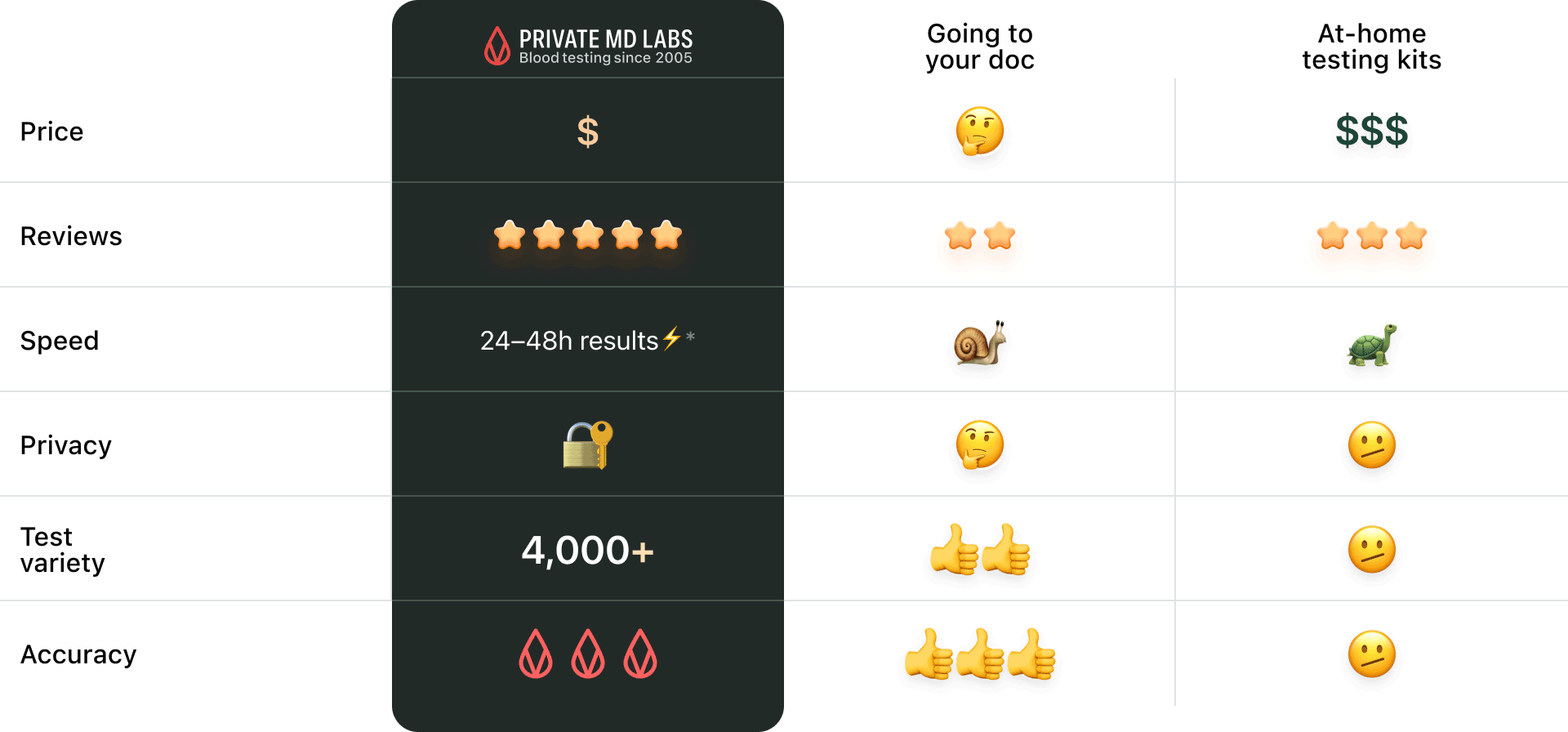
Us vs. Them
Not overhyped or overpriced. Just comprehensive blood testing made simple and for everyone.
* Regular blood test results (e.g., CBC) typically start arriving the next business day after sample collection. More complex tests, such as hormone panels, may take up to 10–15 business days due to their complexity.
1,000,000+ blood tests later, here's what our customers say
Estradiol Ultrasensitive results may get delayed due to high lab volume.It’s a nationwide delay affecting all labs (not just us). Standard processing times apply to all other tests in this panel.
Lipoprotein extended turnaround
Lipoprotein Fractionation, Ion Mobility results may get delayed due to high lab volume.It’s a nationwide delay affecting all labs (not just us). Standard processing times apply to all other tests in this panel.
Pregnenolone extended turnaround
Pregnenolone results may get delayed due to high lab volume.It’s a nationwide delay affecting all labs (not just us). Standard processing times apply to all other tests in this panel.



 90-day money-back guarantee
 Lab order in minutes
 Save a trip to the doctor
 Low prices since 2005
 Labs within 2 miles