Fungal infections are conditions caused by pathogenic fungi that can affect the skin, nails, lungs, or internal organs. They are caused by exposure to environmental fungi like Trichoderma viride, Aspergillus, Candida, and other fungal organisms that invade the body, particularly in immunocompromised individuals. The Respiratory Allergy Panel Region IV is the most important test for detecting antibodies to environmental fungi and assessing immune response to fungal exposure.
90-day money-back guaranteeLab order in minutesSave a trip to the doctorLow prices since 2005Labs within 2 miles
What causes fungal infections?
Fungal infections are caused by pathogenic fungi that invade the body through inhalation, skin contact, or wounds. Common culprits include Candida albicans (causing yeast infections), Aspergillus species (causing lung infections), dermatophytes (causing skin and nail infections), and environmental fungi like Trichoderma viride. These organisms are everywhere in our environment—in soil, on plants, and in the air we breathe. While healthy immune systems can usually fight off these fungi, people with weakened immunity are at higher risk for developing serious infections that can spread from the skin to internal organs.
What is the best test for fungal infections?
The Respiratory Allergy Panel Region IV is the most important blood test for fungal infections because it detects antibodies (IgG and IgE) to various environmental fungi that commonly cause infections, especially in Florida residents south of Orlando. This comprehensive panel measures your immune system's response to fungal exposure and helps identify which specific fungi your body has encountered. For targeted testing, the Trichoderma viride IgG test is essential for detecting antibodies to this specific opportunistic fungus that can cause infections in people with compromised immune systems. These blood tests measure the antibodies your body produces when fighting fungal invaders, providing crucial information about exposure and immune response.
When should I get tested for fungal infections?
You should get tested if you have persistent respiratory symptoms like coughing or wheezing that won't go away, especially if you live in humid climates or areas with high mold exposure. Testing is crucial for people with weakened immune systems due to HIV, cancer treatment, organ transplants, or long-term steroid use who develop unexplained symptoms. You should also consider testing if you have recurring skin rashes, nail infections that don't heal, or if you work in healthcare, agriculture, or construction where fungal exposure is common. Early detection through blood testing helps prevent minor fungal issues from becoming serious systemic infections.
What are the symptoms of fungal infections?
Symptoms vary widely depending on where the fungal infection occurs in your body. Skin infections cause red, itchy rashes, scaling, cracking, or discolored nails that become thick and brittle. Respiratory fungal infections lead to persistent cough, wheezing, shortness of breath, chest pain, and fatigue that feels like a cold that never goes away. Systemic fungal infections in immunocompromised people can cause fever, chills, night sweats, unexplained weight loss, and general weakness. Oral thrush appears as white patches in the mouth, while vaginal yeast infections cause itching, burning, and unusual discharge. If you notice any of these symptoms lasting more than a week or two, testing can help identify the underlying cause.
Who is at risk for fungal infections?
People with weakened immune systems face the highest risk, including those with HIV/AIDS, cancer patients undergoing chemotherapy, organ transplant recipients taking immunosuppressive drugs, and people on long-term corticosteroid therapy. Diabetes increases susceptibility because high blood sugar creates an ideal environment for fungal growth. Healthcare workers, farmers, construction workers, and people working in damp environments face regular exposure to fungal spores. Geographic location matters too—residents of humid regions like Florida have higher exposure to environmental fungi. Anyone taking broad-spectrum antibiotics for extended periods can develop fungal overgrowth because these medications kill protective bacteria. Older adults and infants with developing immune systems are also more vulnerable to fungal infections.
What happens if fungal infections are left untreated?
Untreated fungal infections can progress from minor annoyances to life-threatening conditions, especially in immunocompromised individuals. Superficial skin infections can spread deeper into tissues, causing cellulitis and permanent scarring. Nail fungus can lead to complete nail destruction and bacterial superinfections. Respiratory fungal infections like aspergillosis can progress to invasive disease that destroys lung tissue and spreads to the brain, heart, and kidneys through the bloodstream. Systemic fungal infections have mortality rates as high as 50% in severely immunocompromised patients. Candida infections can cause bloodstream infections (fungemia) leading to sepsis and organ failure. Early detection through antibody testing allows for prompt treatment before these serious complications develop.
Can fungal infections be diagnosed with a blood test?
Blood tests can detect fungal infections by measuring antibodies (IgG and IgE) that your immune system produces in response to fungal exposure. The Respiratory Allergy Panel and Trichoderma viride IgG test identify specific antibodies to fungi, indicating that your body has encountered these organisms and mounted an immune response. Elevated antibody levels suggest current or past fungal exposure that could be causing your symptoms. While blood tests are valuable for assessing immune response and identifying which fungi you've been exposed to, doctors often combine blood test results with other methods like fungal cultures, microscopic examination of samples, or imaging studies for comprehensive diagnosis. Blood testing is particularly useful for immunocompromised patients who need ongoing monitoring for fungal exposure.
How are fungal infections treated?
Treatment depends on the type and severity of the fungal infection. Topical antifungal creams, lotions, or powders containing clotrimazole, miconazole, or terbinafine effectively treat skin and nail infections. Oral antifungal medications like fluconazole, itraconazole, or terbinafine are prescribed for more widespread or resistant infections. Serious systemic fungal infections in hospitalized or immunocompromised patients require intravenous antifungal drugs like amphotericin B, voriconazole, or caspofungin. Treatment duration ranges from weeks for superficial infections to months for deep or systemic infections. Your doctor will adjust treatment based on blood test results showing your immune response and the specific fungus identified. Immunocompromised patients may need preventive antifungal therapy and regular monitoring through antibody testing.
How can I prevent fungal infections?
Keep your skin clean and dry, especially in areas that trap moisture like between toes, under breasts, and in skin folds. Wear breathable fabrics and change out of sweaty clothes promptly after exercise. Avoid walking barefoot in public showers, pools, and locker rooms where fungal spores thrive. Control indoor humidity below 50% and fix water leaks promptly to prevent mold growth in your home. If you're immunocompromised, avoid activities that expose you to soil, compost, or bird droppings where environmental fungi concentrate. Maintain good blood sugar control if you have diabetes, as high glucose levels encourage fungal growth. Don't share towels, shoes, or personal items that contact skin. Consider prophylactic antifungal therapy if you're undergoing chemotherapy or taking immunosuppressive medications.
What natural remedies help with fungal infections?
Tea tree oil has natural antifungal properties and can be applied topically to skin and nail infections when diluted with a carrier oil. Garlic contains allicin, a compound with antifungal effects, and can be consumed raw or as supplements to support immune function. Probiotics containing Lactobacillus strains help restore healthy bacteria that compete with fungal overgrowth, especially after antibiotic use. Apple cider vinegar creates an acidic environment that inhibits fungal growth and can be used in foot soaks or diluted for topical application. Coconut oil contains caprylic acid with antifungal properties and can be applied to skin or consumed. However, while these natural remedies may provide relief for mild superficial infections, they should not replace medical treatment for serious or systemic fungal infections. Always consult a healthcare provider and consider blood testing to assess the extent of fungal exposure before relying solely on home remedies.
How’s this work?
Getting your blood test with us is easy, private & backed by the power of science.
Long story short:
In the test options, use the filters or search box to narrow your choices and find the test you want.
If you need a hand navigating through options, text our super friendly support team at 754-799-7833, and we'll provide tailored suggestions to help you find the ideal test.
Once your order is placed, we’ll create your doctor’s lab order remotely, without any need for you to make a trip to a doctor in person or to talk to the doctor. Expect to receive your doctor’s lab order right in your inbox. It will also be in your patient portal if you need to find it later. We’ll also include instructions regarding fasting and other requirements for your test. Your patient portal will be auto-created hassle-free during checkout.
If this is your first time ordering, you'll be prompted to create a password for instant login access to your patient portal. It's a quick way to conveniently access your orders and results whenever you want.
When you’re ready, visit one of our 4,000 locations. Just bring your ID – no printing or faxing of your lab order is needed, as your order and details will already be in the lab system.
Note that most lab locations don’t accept walk-ins, so it’s best to book an appointment in advance. Don’t worry – we’ll provide detailed instructions along the way.
You’ll get your results via email & SMS and dive into understanding your body better. Yup, that easy!
If you have any questions, please text us at 754-799-7833 or email support@privatemdlabs.com and we'll gladly help you.
How do I know which test to get?
In the test options, find the test you want.
If you’re not sure which test to get, we can lend a hand in finding the right option.
Just text or call us at 754-799-7833, email us at support@privatemdlabs.com, and we'll gladly help you. We've got your back and reply quickly.
Is it possible to make changes to my lab order if I made a mistake with the name, date of birth, or any other details?
Absolutely! We totally understand that errors can happen. No worries, we're here to help you.
Just reach out to us via text at 754-799-7833 or shoot us an email at
support@privatemdlabs.com. Remember to include your order number and let us know the correct information you’d like to update.
Our awesome team will jump right in and make sure everything is sorted out and accurate for you.
There are no changes necessary if your address is wrong on the requisition though. We don’t mail anything out.
Our lab requires an address to be listed to generate an order.
Do you accept health insurance?
Only HSA & FSA is accepted.
Our services are strictly self-pay and cannot be submitted to your health insurance provider except for Health Savings Accounts or Flexible Savings Accounts.
This policy applies to all insurance companies, including federal health insurance programs like Medicare.
You can read more about our cancellation policy here.
How can I find a lab location near me?
During the ordering process, you’ll be able to select a specific lab near you, with no strings attached!
You can switch it up later easily and visit any of our authorized locations as long as it’s the same lab company you selected your test for (Quest Diagnostics or Labcorp).
Before you proceed with your order, feel free to browse through all our lab locations here. This will give you the peace of mind of knowing that there's a lab nearby your home, office or your favorite gym.
Here’s how easy it is to get blood work done on your terms
Order your testSave a trip to the doctor. Your results will come with clear, friendly explanations.Takes 2 minutes
Book an appointmentVisit any of our 4,000 nearby lab locations to have your samples collected.Book or walk-in
Get resultsReceive a clear, easy-to-digest health report by email & SMS within a few business days.Get answers, fast
Here’s why 1,000,000+ customers chose us for affordable hassle-free private blood testing.
You get clinical lab reports & simplified health insights.
Save time & gas, go straight to the lab. Our doctors cover the rest.
Results start landing the next day after your lab visit.*
We don’t sell or share your data. Your time & privacy matter.
US-licensed doctors have your back if things get unclear.
No hidden fees, nice discounts for regular checkups.
Save a trip to the doctor, go directly to the lab
Instant orders, results often overnight*
Results explained in simple language
Reviewed by US licensed doctors
Fast & confidential, we never sell or share your data
No insurance needed, transparent pricing
Demo results
Testosterone375 ng/dL
Demo results
NormalOptimal 400 - 1000High
375 ng/dL
What this means
Your testosterone levels are slightly below the optimal range. While this is not necessarily cause for concern, it may contribute to occasional fatigue, reduced motivation, or lower muscle mass over time.
Recommended actions
Increase resistance or strength training
Prioritize 7–8 hours of quality sleep per night, try to reduce stress
Include more zinc- and magnesium-rich foods (like shellfish, beef, pumpkin seeds, spinach)
Consider retesting in 3–6 months
* Regular blood test results (e.g., CBC) typically start arriving the next business day after sample collection. More complex tests, such as hormone panels, may take up to 10–15 business days due to their complexity.
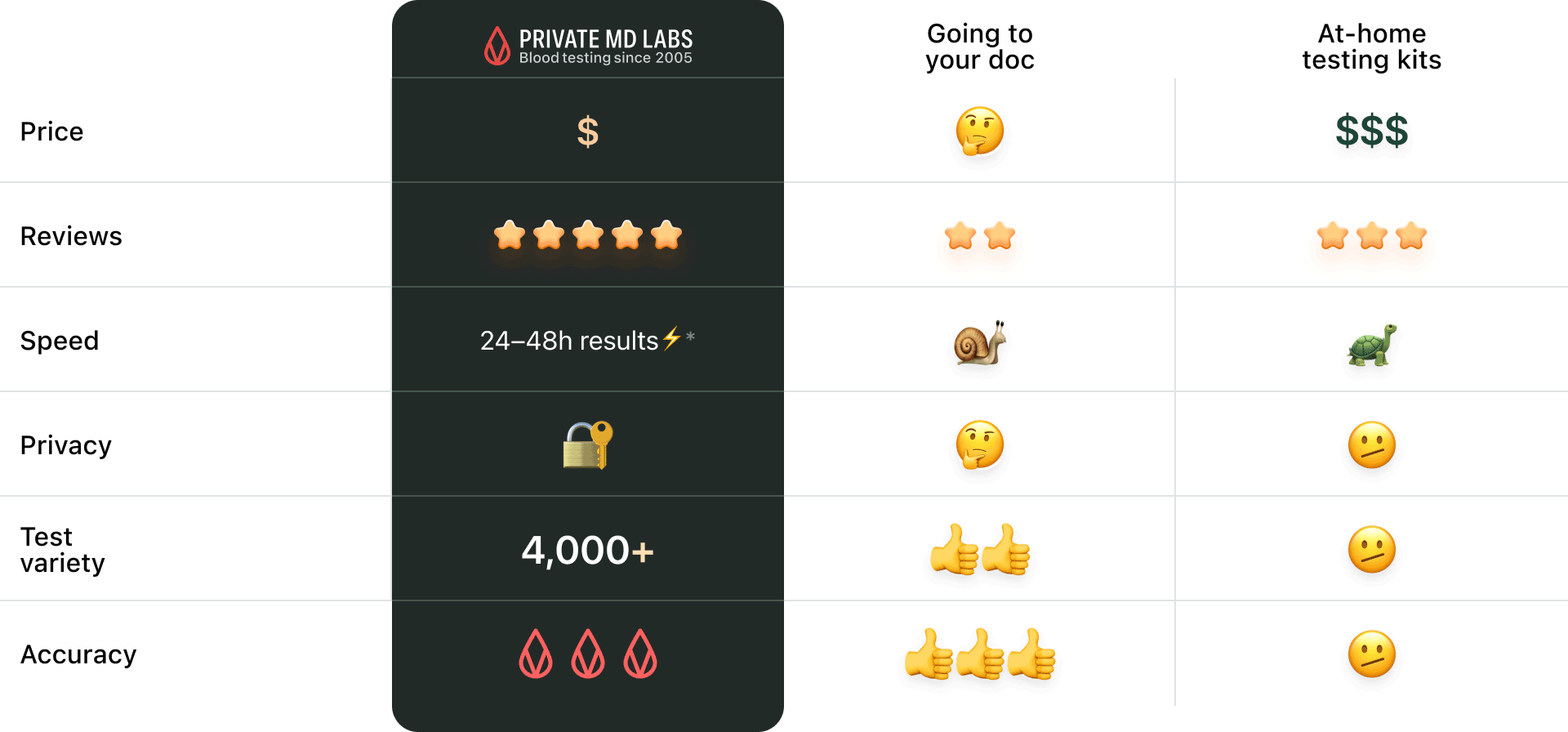
Us vs. Them
Not overhyped or overpriced. Just comprehensive blood testing made simple and for everyone.
* Regular blood test results (e.g., CBC) typically start arriving the next business day after sample collection. More complex tests, such as hormone panels, may take up to 10–15 business days due to their complexity.
1,000,000+ blood tests later, here's what our customers say
Estradiol Ultrasensitive results may get delayed due to high lab volume.It’s a nationwide delay affecting all labs (not just us). Standard processing times apply to all other tests in this panel.
Lipoprotein extended turnaround
Lipoprotein Fractionation, Ion Mobility results may get delayed due to high lab volume.It’s a nationwide delay affecting all labs (not just us). Standard processing times apply to all other tests in this panel.
Pregnenolone extended turnaround
Pregnenolone results may get delayed due to high lab volume.It’s a nationwide delay affecting all labs (not just us). Standard processing times apply to all other tests in this panel.



 90-day money-back guarantee
 Lab order in minutes
 Save a trip to the doctor
 Low prices since 2005
 Labs within 2 miles