Early menopause is the cessation of menstrual periods before age 45, leading to significant hormonal changes and health implications. It is caused by diminished ovarian function resulting in decreased production of estrogen and progesterone, along with depleted egg reserves. The Anti-Mullerian Hormone (AMH) test is the most important test for assessing early menopause risk because it directly measures ovarian reserve and predicts menopausal timing.
90-day money-back guaranteeLab order in minutesSave a trip to the doctorLow prices since 2005Labs within 2 miles
What causes early menopause?
Early menopause is caused by premature ovarian insufficiency, where the ovaries stop producing normal amounts of estrogen and progesterone before age 45. This can result from genetic factors, autoimmune disorders that attack ovarian tissue, chemotherapy or radiation treatment, surgical removal of the ovaries, or certain chromosomal abnormalities like Turner syndrome. In many cases, the exact cause remains unknown, though family history of early menopause significantly increases risk.
What is the best test for early menopause?
The Anti-Mullerian Hormone (AMH) test is the most important test for early menopause because it directly measures ovarian reserve by detecting the hormone produced by developing egg follicles in the ovaries. AMH levels naturally decline with age, but a drastic drop indicates diminished ovarian function and can predict the timing of menopause years in advance. This test is especially valuable for women under 45 experiencing irregular periods or menopausal symptoms, as it provides clear insight into remaining egg supply and reproductive aging. Healthcare providers often combine AMH testing with FSH (follicle-stimulating hormone) and estradiol measurements for a comprehensive assessment of ovarian function.
When should I get tested for early menopause?
You should get tested if you experience irregular or missed periods before age 45, hot flashes, night sweats, vaginal dryness, difficulty sleeping, or mood changes that suggest hormonal fluctuation. Testing is particularly important if you have a family history of early menopause, have undergone cancer treatment, or have been diagnosed with autoimmune conditions. Women who are experiencing difficulty conceiving or want to understand their fertility window should also consider AMH testing to assess their ovarian reserve and plan accordingly.
What are the symptoms of early menopause?
Early menopause symptoms mirror those of natural menopause and include irregular or absent menstrual periods, hot flashes, night sweats, vaginal dryness, decreased libido, and difficulty sleeping. Women may also experience mood swings, irritability, anxiety, difficulty concentrating, and reduced energy levels. Physical changes can include dry skin, thinning hair, weight gain around the midsection, and joint pain. These symptoms result from declining estrogen and progesterone levels as ovarian function diminishes.
Who is at risk for early menopause?
Women with a family history of early menopause face the highest risk, as genetics play a significant role in the timing of ovarian decline. Other risk factors include autoimmune diseases like thyroid disorders or rheumatoid arthritis, chromosomal abnormalities such as Turner syndrome or Fragile X syndrome, chemotherapy or radiation therapy for cancer, and surgical removal of the ovaries. Smoking significantly increases early menopause risk, as does never having been pregnant. Women who have had a hysterectomy with ovary preservation may also experience earlier menopause than average.
What happens if early menopause is left untreated?
Untreated early menopause increases the risk of serious long-term health complications due to prolonged estrogen deficiency. Women face elevated risk of osteoporosis and bone fractures, as estrogen is crucial for maintaining bone density. Cardiovascular disease risk increases substantially, including higher rates of heart attack and stroke. Cognitive decline and increased dementia risk have been associated with early estrogen loss. Additional complications include premature skin aging, vaginal atrophy leading to painful intercourse, urinary incontinence, mood disorders including depression and anxiety, and reduced quality of life. Hormone replacement therapy and other treatments can significantly reduce these risks.
Can early menopause be diagnosed with a blood test?
Yes, early menopause can be effectively assessed through blood tests that measure hormone levels and ovarian reserve. The AMH test is the most reliable indicator of ovarian function and remaining egg supply, while FSH (follicle-stimulating hormone) levels rise as ovaries decline in function. Estradiol testing shows decreased estrogen production characteristic of menopause. Thyroid function tests may also be ordered to rule out thyroid disorders that can mimic menopausal symptoms. While menopause is primarily a clinical diagnosis based on menstrual history and symptoms, blood tests provide crucial confirmation and help distinguish early menopause from other conditions causing similar symptoms.
How is early menopause treated?
Early menopause is primarily treated with hormone replacement therapy (HRT), which replaces estrogen and progesterone to alleviate symptoms and reduce long-term health risks. HRT effectively manages hot flashes, night sweats, vaginal dryness, and mood changes while protecting against bone loss and cardiovascular disease. Treatment typically continues until the natural age of menopause (around 51) to provide the hormonal support the body would normally have. Non-hormonal options include vaginal moisturizers and lubricants, antidepressants for mood symptoms and hot flashes, and medications to prevent osteoporosis. Lifestyle modifications including regular exercise, calcium and vitamin D supplementation, and a healthy diet support overall health during this transition.
How can I prevent early menopause?
While genetic and medical causes of early menopause cannot be prevented, certain lifestyle choices can support ovarian health and potentially delay premature ovarian decline. Avoid smoking, as it significantly accelerates ovarian aging and increases early menopause risk by several years. Maintain a healthy weight through balanced nutrition and regular exercise, as both obesity and being severely underweight can affect ovarian function. Manage stress through relaxation techniques, adequate sleep, and mental health support, as chronic stress may impact reproductive hormones. Limit exposure to environmental toxins and endocrine disruptors found in certain plastics and chemicals. For women undergoing cancer treatment, discuss fertility preservation options with your oncologist before starting chemotherapy or radiation.
What natural remedies help with early menopause symptoms?
Several natural approaches can help manage early menopause symptoms alongside medical treatment. Phytoestrogens found in soy products, flaxseeds, and legumes may provide mild estrogen-like effects that reduce hot flashes and support bone health. Black cohosh supplements have shown promise in reducing hot flashes and mood swings for some women. Regular exercise, particularly weight-bearing activities and strength training, helps maintain bone density, improve mood, and reduce hot flash frequency. Acupuncture has demonstrated effectiveness in managing hot flashes and sleep disturbances. Mindfulness meditation and deep breathing exercises can reduce stress and improve emotional well-being. Maintaining a cool bedroom environment, wearing breathable clothing, and avoiding hot flash triggers like spicy foods, caffeine, and alcohol can provide symptom relief. Always consult your healthcare provider before starting supplements, as they can interact with medications.
How’s this work?
Getting your blood test with us is easy, private & backed by the power of science.
Long story short:
In the test options, use the filters or search box to narrow your choices and find the test you want.
If you need a hand navigating through options, text our super friendly support team at 754-799-7833, and we'll provide tailored suggestions to help you find the ideal test.
Once your order is placed, we’ll create your doctor’s lab order remotely, without any need for you to make a trip to a doctor in person or to talk to the doctor. Expect to receive your doctor’s lab order right in your inbox. It will also be in your patient portal if you need to find it later. We’ll also include instructions regarding fasting and other requirements for your test. Your patient portal will be auto-created hassle-free during checkout.
If this is your first time ordering, you'll be prompted to create a password for instant login access to your patient portal. It's a quick way to conveniently access your orders and results whenever you want.
When you’re ready, visit one of our 4,000 locations. Just bring your ID – no printing or faxing of your lab order is needed, as your order and details will already be in the lab system.
Note that most lab locations don’t accept walk-ins, so it’s best to book an appointment in advance. Don’t worry – we’ll provide detailed instructions along the way.
You’ll get your results via email & SMS and dive into understanding your body better. Yup, that easy!
If you have any questions, please text us at 754-799-7833 or email support@privatemdlabs.com and we'll gladly help you.
How do I know which test to get?
In the test options, find the test you want.
If you’re not sure which test to get, we can lend a hand in finding the right option.
Just text or call us at 754-799-7833, email us at support@privatemdlabs.com, and we'll gladly help you. We've got your back and reply quickly.
Is it possible to make changes to my lab order if I made a mistake with the name, date of birth, or any other details?
Absolutely! We totally understand that errors can happen. No worries, we're here to help you.
Just reach out to us via text at 754-799-7833 or shoot us an email at
support@privatemdlabs.com. Remember to include your order number and let us know the correct information you’d like to update.
Our awesome team will jump right in and make sure everything is sorted out and accurate for you.
There are no changes necessary if your address is wrong on the requisition though. We don’t mail anything out.
Our lab requires an address to be listed to generate an order.
Do you accept health insurance?
Only HSA & FSA is accepted.
Our services are strictly self-pay and cannot be submitted to your health insurance provider except for Health Savings Accounts or Flexible Savings Accounts.
This policy applies to all insurance companies, including federal health insurance programs like Medicare.
You can read more about our cancellation policy here.
How can I find a lab location near me?
During the ordering process, you’ll be able to select a specific lab near you, with no strings attached!
You can switch it up later easily and visit any of our authorized locations as long as it’s the same lab company you selected your test for (Quest Diagnostics or Labcorp).
Before you proceed with your order, feel free to browse through all our lab locations here. This will give you the peace of mind of knowing that there's a lab nearby your home, office or your favorite gym.
Here’s how easy it is to get blood work done on your terms
Order your testSave a trip to the doctor. Your results will come with clear, friendly explanations.Takes 2 minutes
Book an appointmentVisit any of our 4,000 nearby lab locations to have your samples collected.Book or walk-in
Get resultsReceive a clear, easy-to-digest health report by email & SMS within a few business days.Get answers, fast
Here’s why 1,000,000+ customers chose us for affordable hassle-free private blood testing.
You get clinical lab reports & simplified health insights.
Save time & gas, go straight to the lab. Our doctors cover the rest.
Results start landing the next day after your lab visit.*
We don’t sell or share your data. Your time & privacy matter.
US-licensed doctors have your back if things get unclear.
No hidden fees, nice discounts for regular checkups.
Save a trip to the doctor, go directly to the lab
Instant orders, results often overnight*
Results explained in simple language
Reviewed by US licensed doctors
Fast & confidential, we never sell or share your data
No insurance needed, transparent pricing
Demo results
Testosterone375 ng/dL
Demo results
NormalOptimal 400 - 1000High
375 ng/dL
What this means
Your testosterone levels are slightly below the optimal range. While this is not necessarily cause for concern, it may contribute to occasional fatigue, reduced motivation, or lower muscle mass over time.
Recommended actions
Increase resistance or strength training
Prioritize 7–8 hours of quality sleep per night, try to reduce stress
Include more zinc- and magnesium-rich foods (like shellfish, beef, pumpkin seeds, spinach)
Consider retesting in 3–6 months
* Regular blood test results (e.g., CBC) typically start arriving the next business day after sample collection. More complex tests, such as hormone panels, may take up to 10–15 business days due to their complexity.
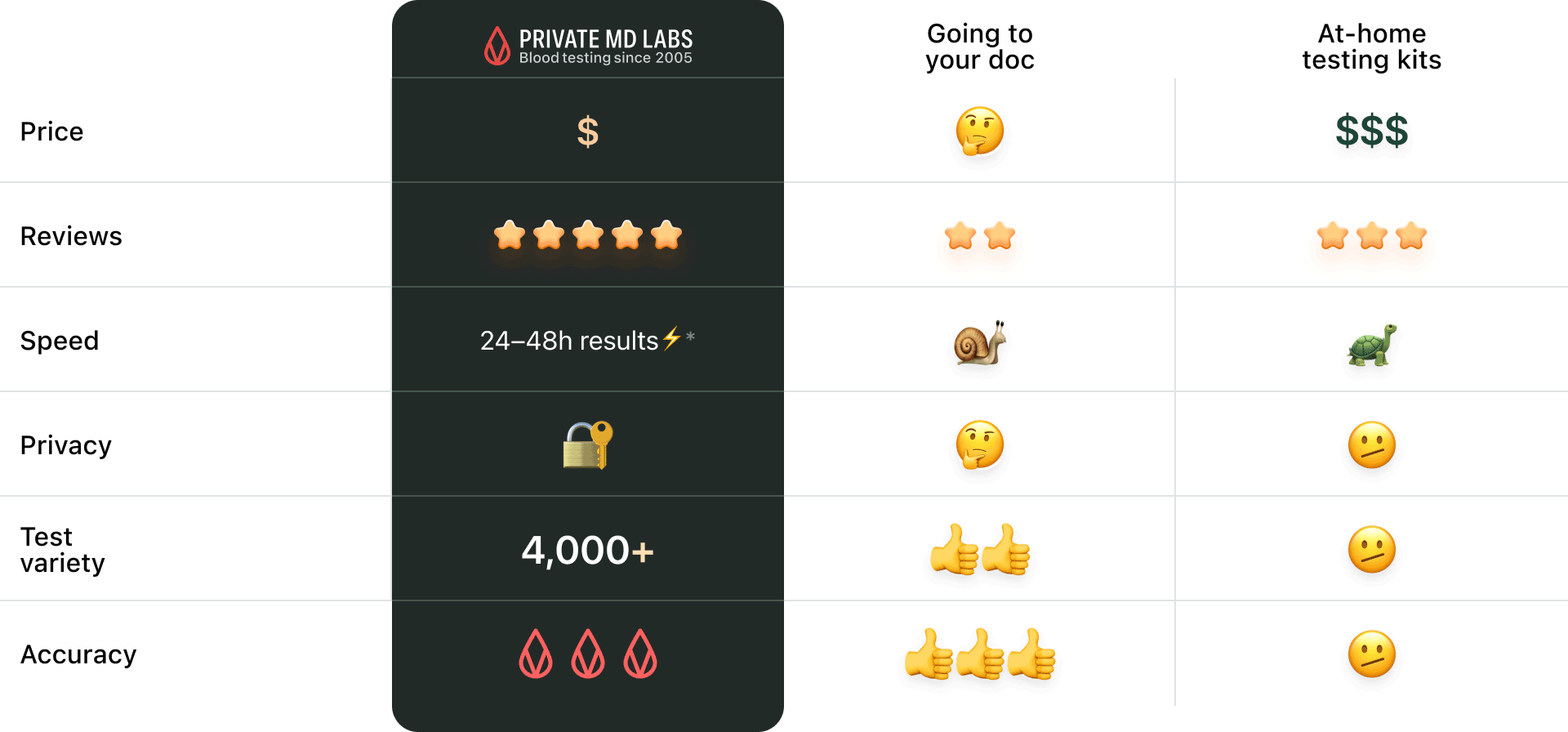
Us vs. Them
Not overhyped or overpriced. Just comprehensive blood testing made simple and for everyone.
* Regular blood test results (e.g., CBC) typically start arriving the next business day after sample collection. More complex tests, such as hormone panels, may take up to 10–15 business days due to their complexity.
1,000,000+ blood tests later, here's what our customers say
Estradiol Ultrasensitive results may get delayed due to high lab volume.It’s a nationwide delay affecting all labs (not just us). Standard processing times apply to all other tests in this panel.
Lipoprotein extended turnaround
Lipoprotein Fractionation, Ion Mobility results may get delayed due to high lab volume.It’s a nationwide delay affecting all labs (not just us). Standard processing times apply to all other tests in this panel.
Pregnenolone extended turnaround
Pregnenolone results may get delayed due to high lab volume.It’s a nationwide delay affecting all labs (not just us). Standard processing times apply to all other tests in this panel.



 90-day money-back guarantee
 Lab order in minutes
 Save a trip to the doctor
 Low prices since 2005
 Labs within 2 miles